Why
I want to make a video game
Making games was always the goal. I built enterprise software for nine years at PayPal instead.
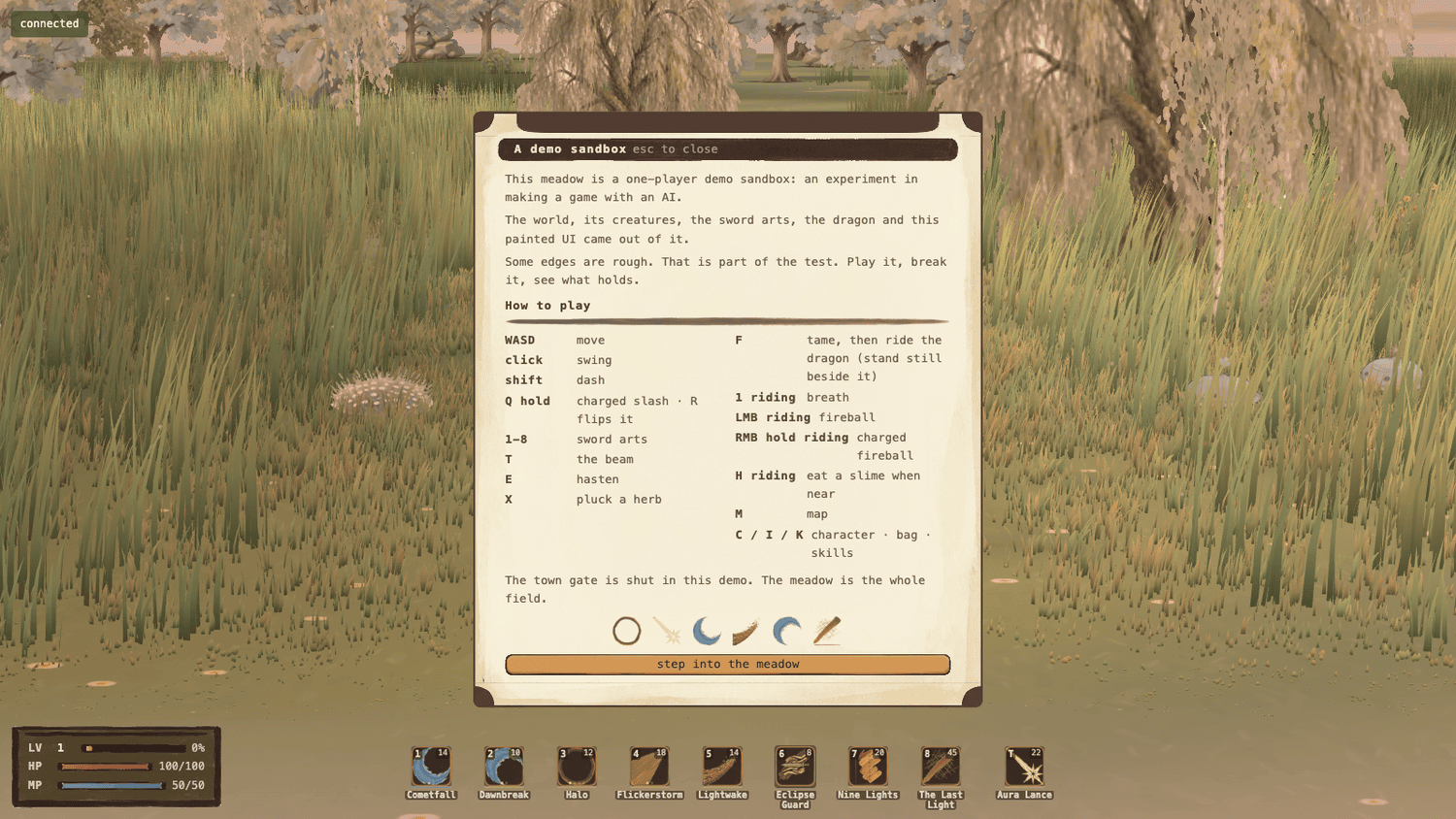
I have zero game development experience, but making my own game has always been a childhood dream. I found the task daunting and intimidating, and I did not know how to approach it. With the emergence of AI, I found it easier to prototype, test, fail, and iterate on game design ideas by delegating different tasks to an agent. I approached game development with AI the same way I would collaborate with a development team when building enterprise SaaS. As a Product Owner, I gathered my game requirements and created a document where I broke down features into Epics and User Stories. Then, with my experience in UI/UX design, I created a design system for my UI components and utilized NNG rules to improve the user experience.
The process
Same process as enterprise SaaS, different deliverable
Nothing about the method changed. Only the thing at the end of it did.
| Building SaaS at work | Building the game |
|---|---|
| Product requirements doc | Game design doc |
| Epics | Systems: meadow, combat, creatures, progression, interface |
| User stories with acceptance criteria | Features and skills: each sword art, the mount, the intro card |
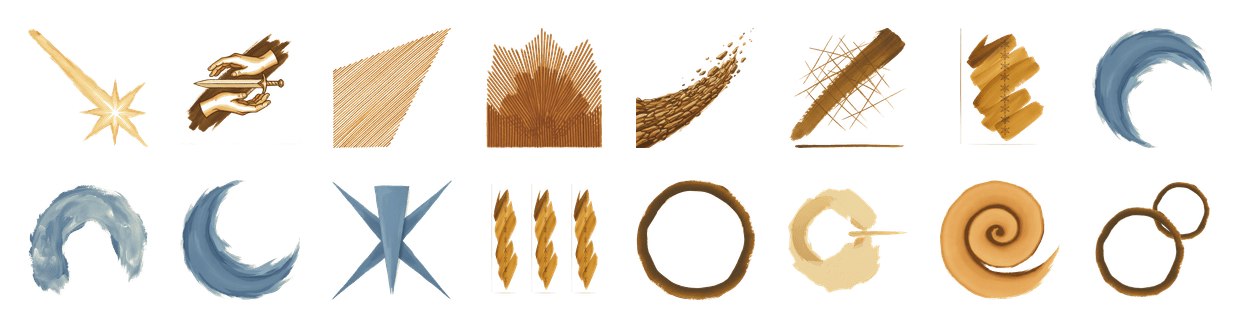
| Design system and component library | Painted UI kit: 26 chrome pieces, 16 skill icons, one brushwork style |
| Prototype, then usability test | Build, then playtest in the browser |
| QA and release notes | Test and QA each release before it goes on the site |
| Iterate on feedback | Iterate the models, the look and feel, the HUD |
The game doc
Systems were epics. Features and skills were user stories.
Each system got an epic; each feature or skill got a story with a done-state I could test. What is in the demo today is what passed.
| Epic | Example user story | Status |
|---|---|---|
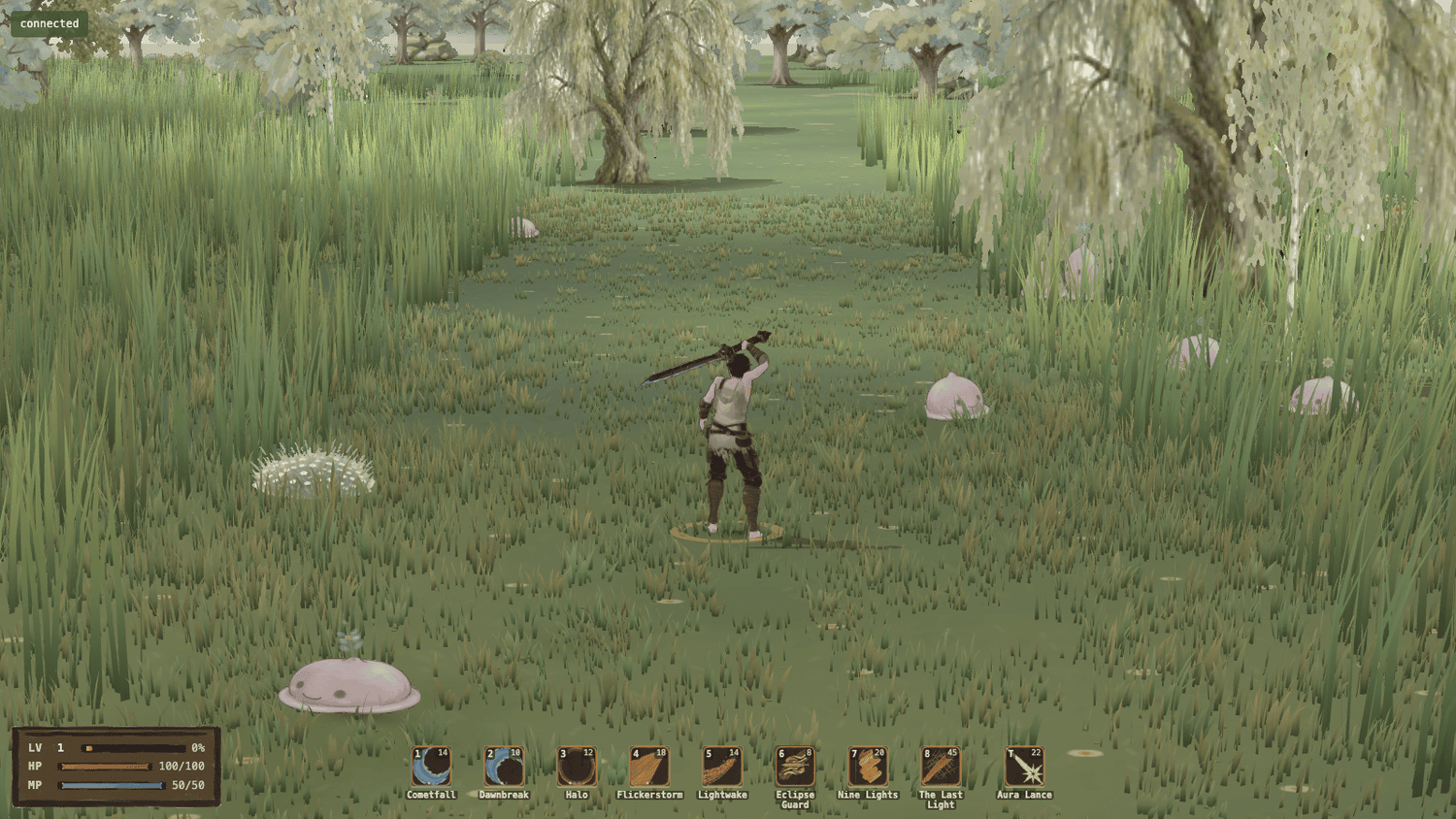
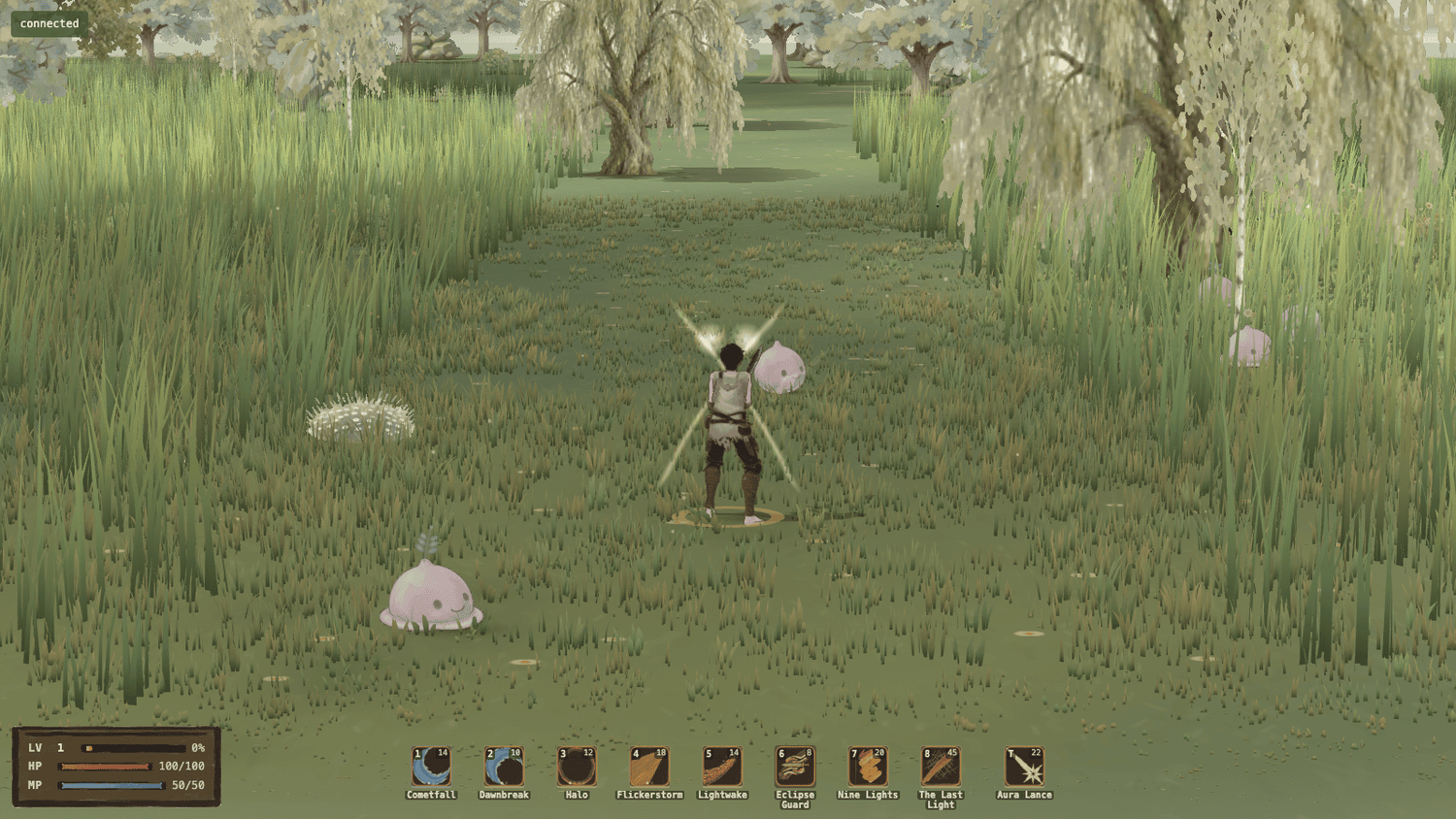
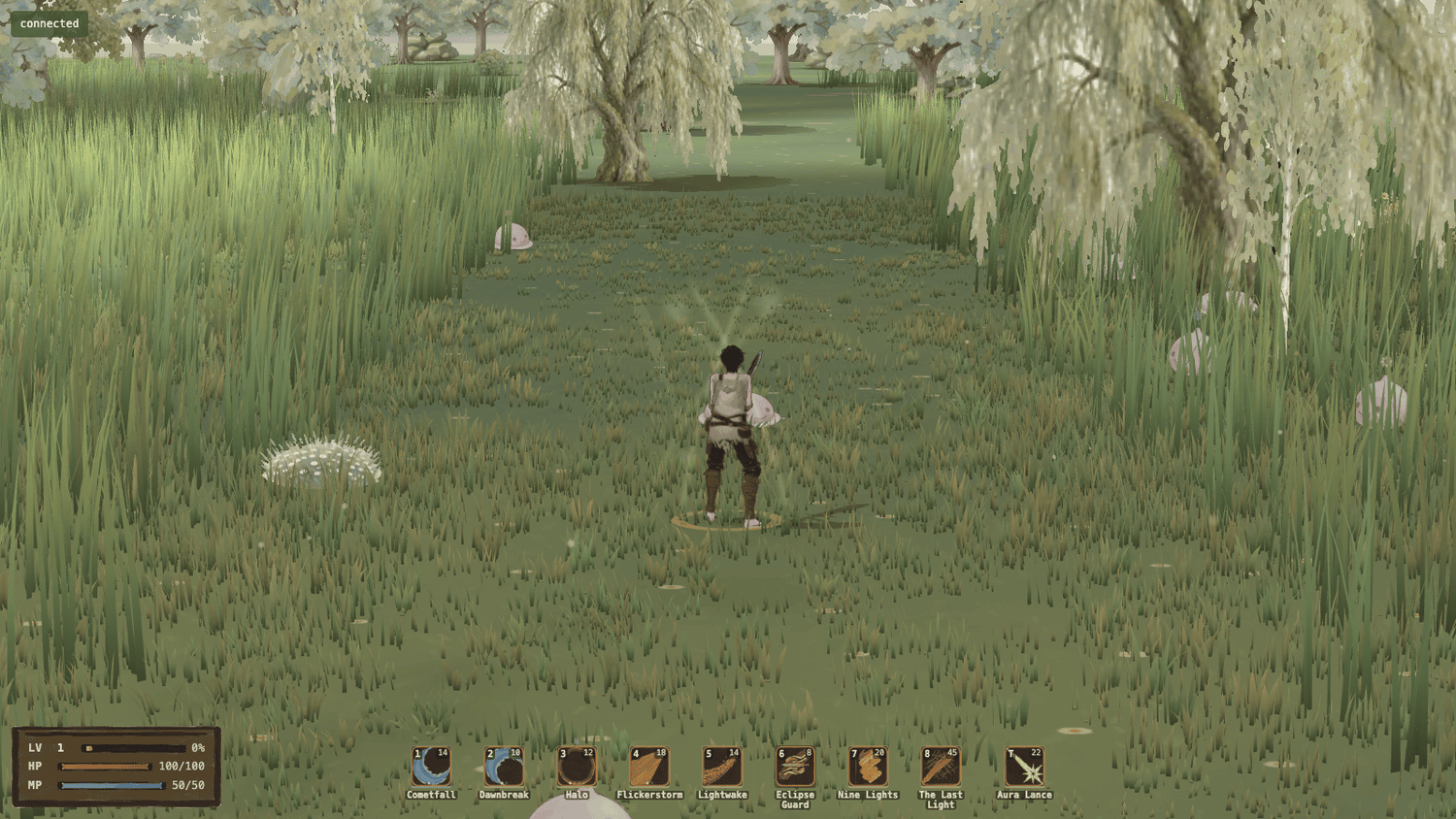
| Meadow | As a player, I walk a painted meadow with tall grass I can cut. | In the demo |
| Combat | As a player, I swing the Nyxblade and use sword arts from the hotbar. | In the demo 9 of 16 arts |
| Creatures | As a player, I fight Jellings, tame the dragon by standing still beside it, then ride it. | In the demo |
| Progression | As a player, I level to 50 and spend points on STR, AGI, VIT and INT. | In the demo per session |
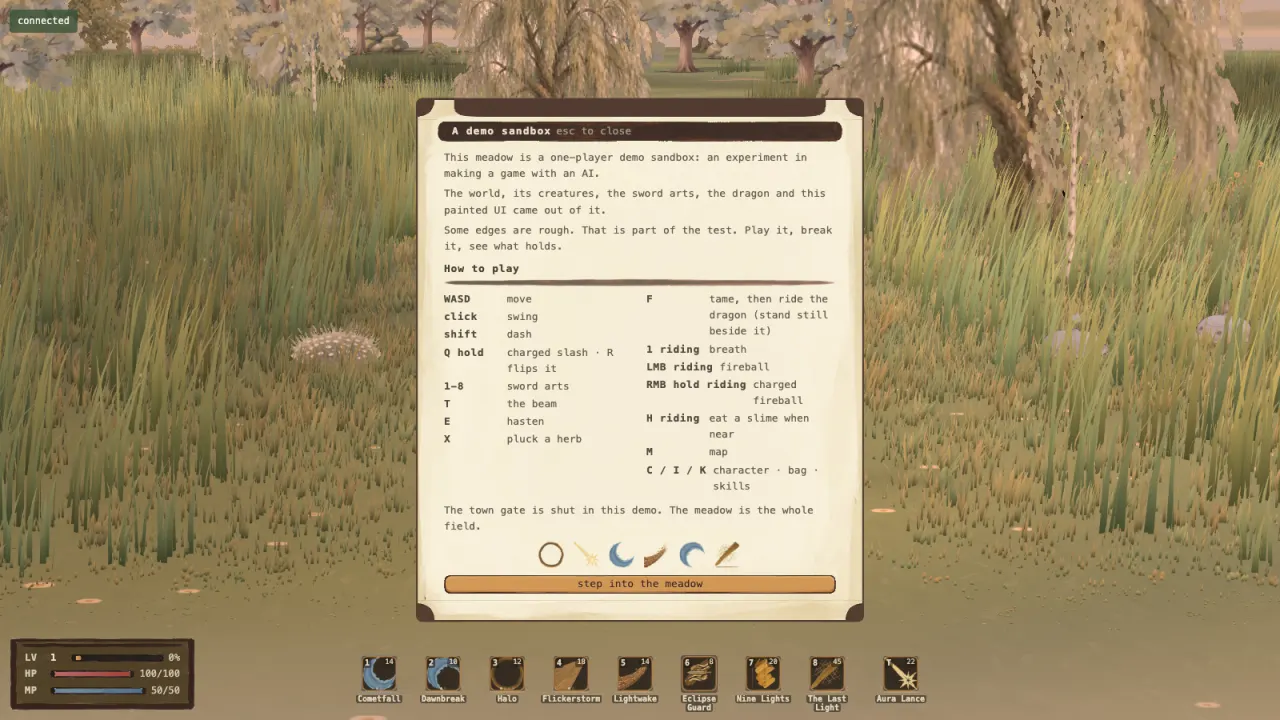
| Interface | As a player, I learn the controls from one card and can close it with Esc. | In the demo |
Who did what
I designed and decided. The AI built.
Me
- The game doc: epics, user stories, what counts as done
- Every design decision, and the briefs for every asset
- Reviewing what came back; keeping, rejecting, re-briefing
- Playtesting, test and QA of each release
- What shipped and what stayed gated
AI and tools
- Engine code from directed coding sessions: three.js, TypeScript, the in-browser server
- Meshes, painted UI chrome and skill icons: Meshy
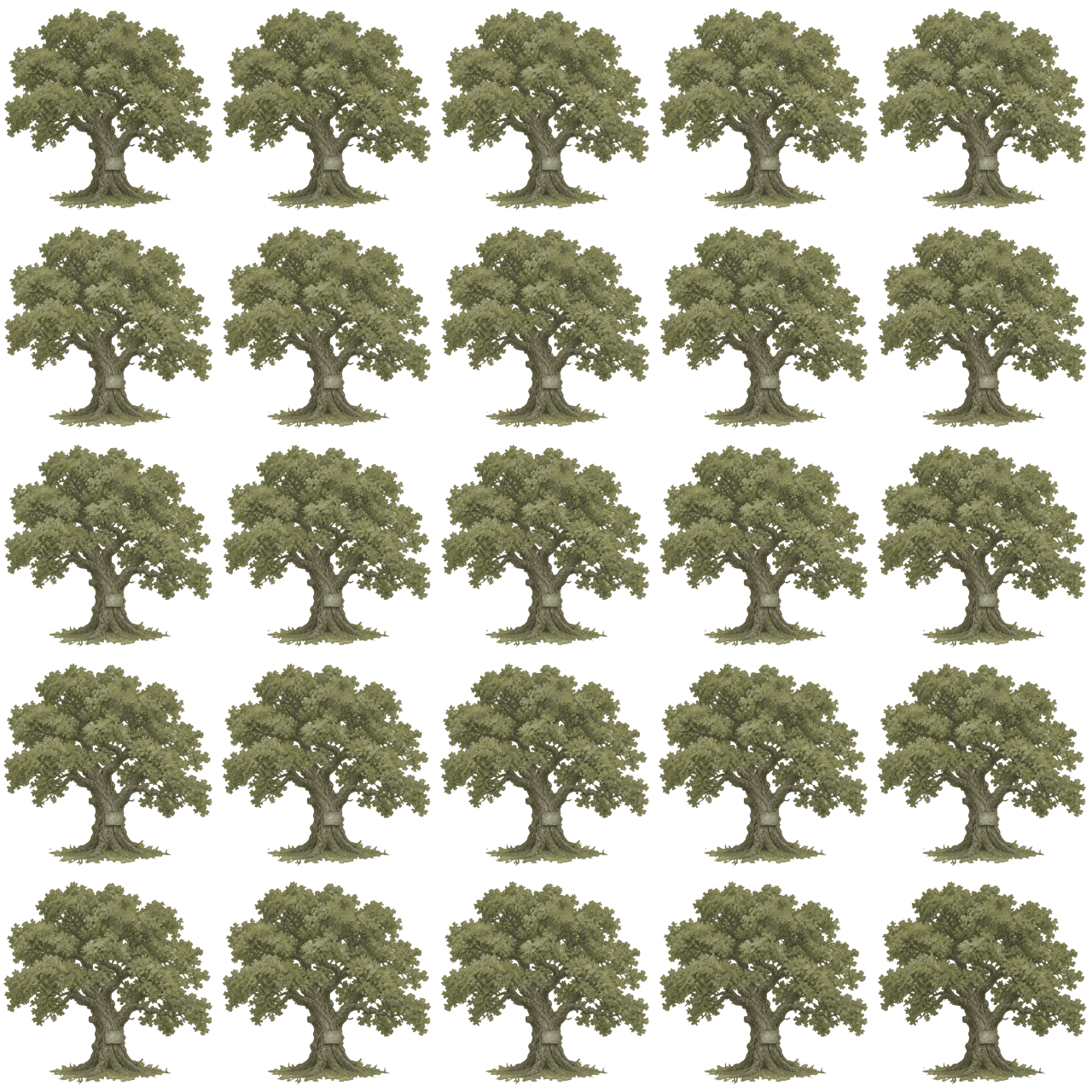
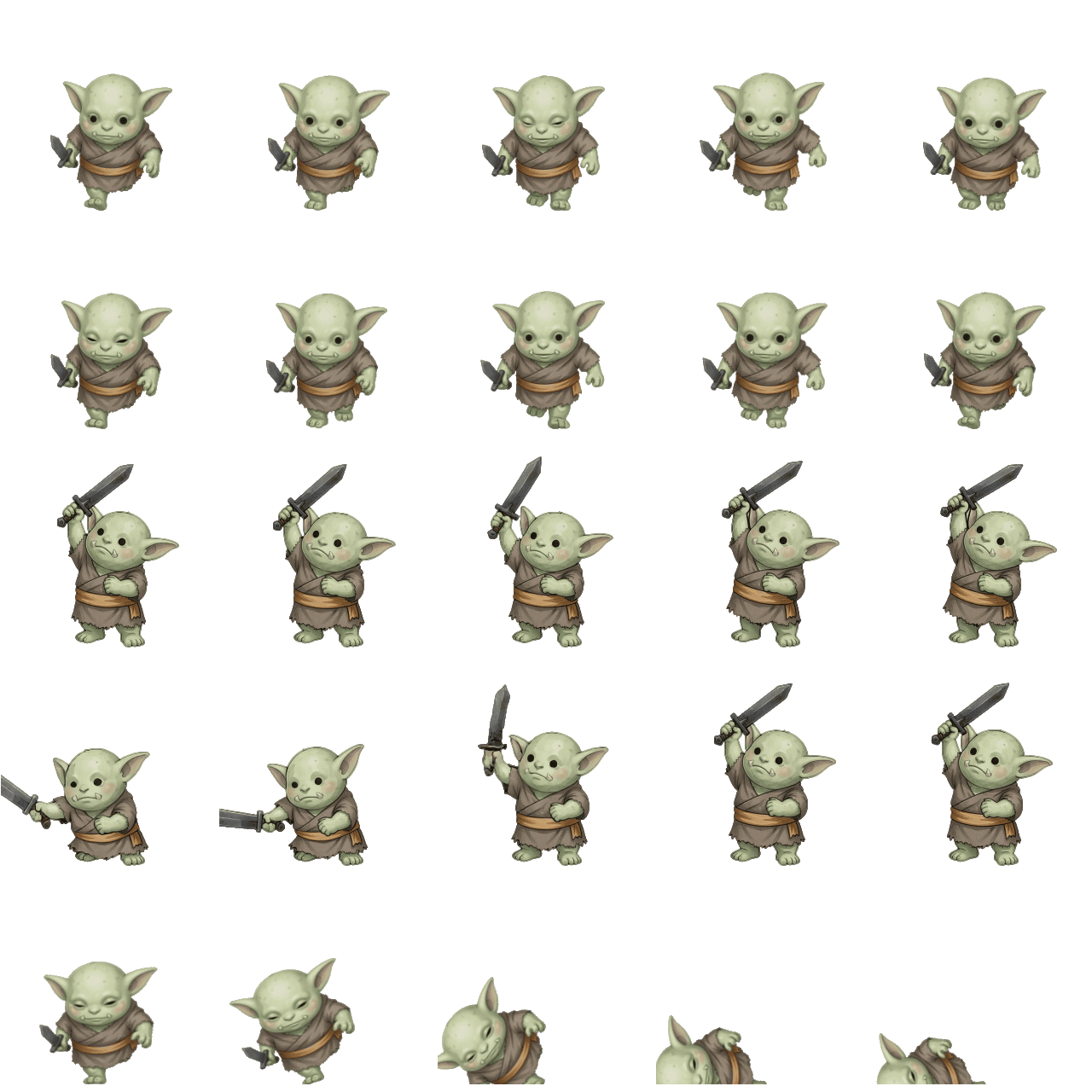
- Foliage sway sheets and the goblin horde: AutoSprite
- Animation clips: Mixamo, NVIDIA MotionBricks
- CC0 fills: Kenney, Quaternius
Test & QA
Every release got tested before it went up
Same discipline as a SaaS release: a test pass against the stories, a QA pass on the build, then it ships, or it doesn't.
| Release | What I tested | Result |
|---|---|---|
| Meadow slice | Controls, the intro card, the hotbar, cutting grass | Playable in the browser |
| Keyboard layer | Every action reachable without a mouse; key hints on screen | Shipped as a separate layer over the build |
| Performance | Frame rate on a 2019 laptop with an integrated GPU | 20 → 60 fps, tall grass kept |
| Look | Pixel grid against the painted textures | 600p, hard pixels, painted look kept |
| Loading | Input during load; the first skill after loading | Input gated until the world is built; no hitch |